Bali is one of the most beautiful places in the world to live. It is also one of the harshest environments for your hair. Understanding why — and what to actually do about it — means the difference between hair that thrives here and hair that slowly deteriorates.
The Four Enemies
Every hair issue you will face in Bali traces back to one of four environmental factors: humidity, UV radiation, salt water, or chlorine. They do not operate in isolation — on a typical Uluwatu day you might encounter all four before noon. Understanding what each one does gives you a basis for doing something about it.
How Humidity Affects Hair Structure
Hair is approximately 91% protein — primarily keratin — with the remaining fraction made up of water, lipids, and trace minerals. The cortex, which forms the structural core of each strand, contains coiled polypeptide chains held together by three types of bonds: strong covalent disulphide bonds, weaker salt bonds, and hydrogen bonds.
Hydrogen bonds are what Bali's humidity attacks first.
A hydrogen bond forms between the oxygen or nitrogen atoms of adjacent keratin chains and water molecules. In dry conditions, these bonds are set and the hair holds its shape. When relative humidity is high — consistently above 70%, which describes most of Bali outside the dry season — water molecules in the air form new hydrogen bonds inside the cortex, pushing the chains apart and swelling the shaft.
This swelling is what causes frizz. The cuticle, which is made of overlapping scales, lifts as the cortex expands unevenly. Hair that was smooth when you left the house becomes textured, thick, and unmanageable by the time you reach the street.
For colour-treated hair, the impact is compounded. Chemical processing — bleaching, lightening, permanent colour — already elevates hair porosity by disrupting the cuticle structure. Porous hair absorbs atmospheric moisture faster and more unevenly than intact hair, which accelerates both the swelling effect and the fade of deposited colour.
Keratin treatments are the most effective single intervention for humidity-related frizz. A professional keratin treatment coats the hair shaft with a cross-linked protein layer that physically seals the cuticle against moisture penetration. The result is hair that behaves in Bali's humidity the way it would in a temperate climate — smooth, predictable, manageable.
UV Radiation and Your Hair
Bali sits at approximately 8 degrees south latitude. The UV index here regularly reaches 11 or 12 — the extreme category — for significant portions of the day, even when it is overcast. This matters for hair because UV radiation degrades both structure and colour.
The mechanism for colour damage is direct. UV light breaks down melanin through photooxidation. In natural uncoloured hair, this manifests as gradual lightening — the sun-bleached look that happens passively over a summer. In colour-treated hair, the same process works against the deposited colour molecules. Ash tones shift toward brass. Toners fade. The cool finish you left the salon with moves progressively warmer over the weeks following your appointment.
UV also degrades the structural proteins in the cortex, specifically the disulphide bonds between cysteine residues. This is the same type of bond that bleaching disrupts. Repeated strong UV exposure on unprotected bleached or lightened hair accelerates the loss of tensile strength — the result is hair that snaps rather than stretches, splits rather than bends.
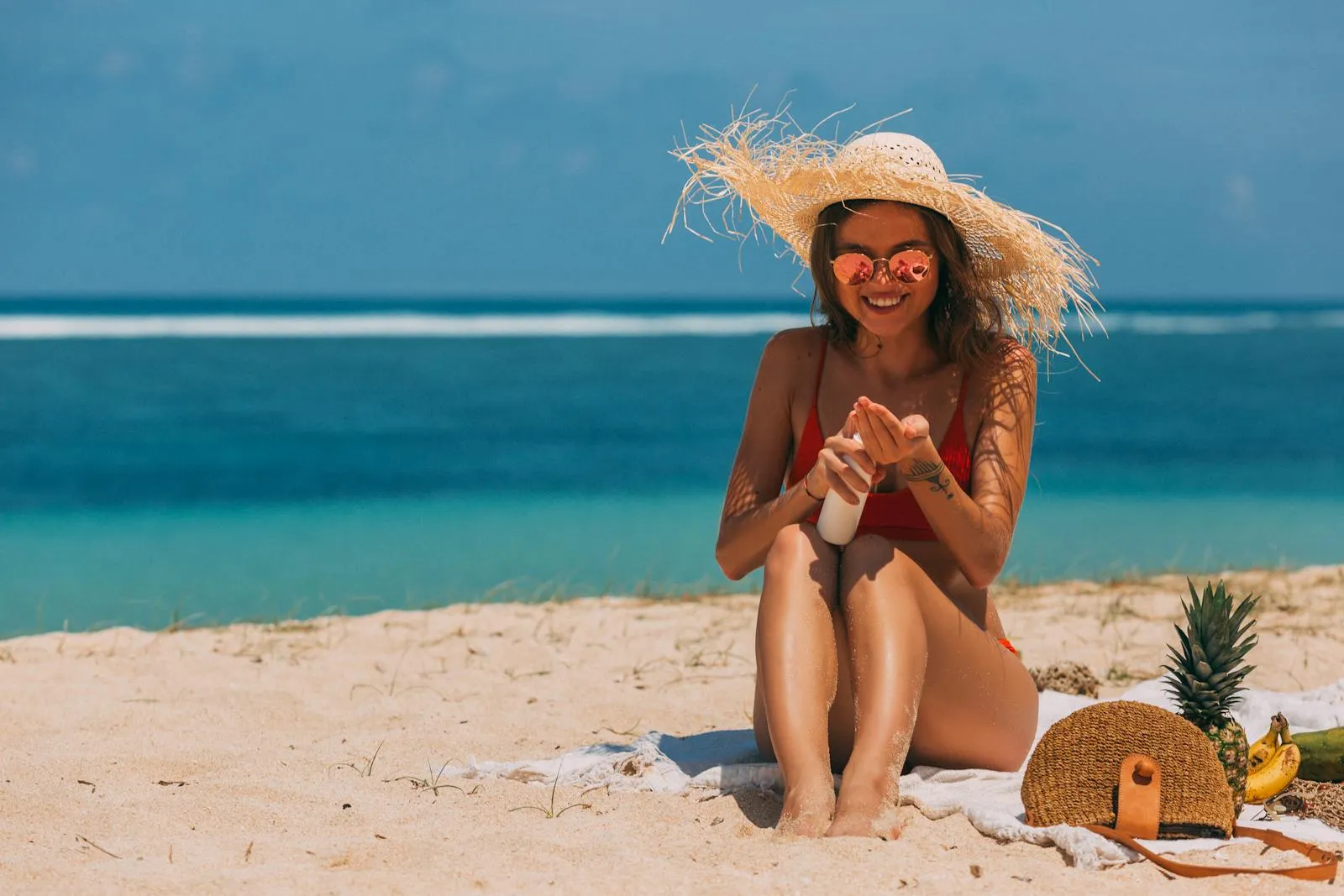
The practical response is UV-protective hair products. This category includes spray-on UV filters (look for benzophenone derivatives or UVA/UVB broadband filters on the ingredient list), protective hair oils that reduce direct photon contact with the shaft surface, and physical coverage — a hat or head wrap during peak UV hours (10 AM to 2 PM). None of these are glamorous solutions, but they are effective ones.
After extended sun exposure — a week at the beach, a long hike, several surf sessions — a deep conditioning mask used at home or a professional bonding treatment in-salon helps restore moisture and begin repairing minor protein disruption before it accumulates into visible damage.
Salt Water: What It Actually Does
Salt water is not just drying. It is a lipid stripper.
The hair shaft is coated with a thin layer of 18-MEA (18-methyleicosanoic acid) — a fatty acid bonded to the outermost cuticle surface. This lipid layer repels water, reduces friction between strands, and is part of what makes healthy hair feel smooth. Chemical processing and physical damage reduce the 18-MEA layer. Salt water accelerates that reduction by pulling lipids from the cuticle surface through osmotic action.
When salt water dries in the hair — as it does when you let it air-dry on the beach or in the sun after a surf — the salt concentration at the hair surface increases dramatically as the water evaporates. This creates localised osmotic pressure that draws moisture out of the cortex and into the crystallising salt. The result is desiccated, roughened hair that feels and looks dull, brittle, and structurally compromised.
The intervention is straightforward. Rinse your hair with fresh water before swimming — saturated hair absorbs proportionally less salt water because the shaft cannot absorb beyond its capacity. Apply a leave-in conditioner or hair oil before getting in the water; the oil creates a partial barrier between the salt and the cuticle surface. Rinse thoroughly with fresh water immediately after swimming, before any drying occurs. Do not let salt water dry in your hair.
For regular ocean swimmers and surfers in Uluwatu, a weekly clarifying shampoo removes mineral buildup from the hair and scalp that accumulates from salt and sun exposure. Use it no more than once a week — it is a stronger surfactant than daily shampoo and will strip colour and natural oils if over-used.
Chlorine: The Oxidising Agent in the Pool
Most pools in Bali are chlorinated, and chlorine is an oxidising agent — the same category as hydrogen peroxide, the active component of hair bleach. Extended chlorine exposure on bleached or lightened hair continues the oxidising process that your bleach started, which means it can further lift and degrade the colour result over time.
The more dramatic risk is on platinum or ash blonde hair. Chlorine reacts with copper and other trace minerals present in pool water to form mineral complexes that deposit on the hair shaft. These deposits can produce a greenish cast — more pronounced on hair with no remaining pigment to counteract the colour shift. This is a chemical reaction, not just a staining effect, and it requires a chelating or clarifying treatment to remove.
Prevention follows the same logic as salt water: wet the hair with fresh water before entering the pool (the shaft absorbs less chlorine when already saturated), apply a silicone-based leave-in conditioner or hair oil as a barrier, and rinse thoroughly immediately after.
If you swim regularly in pools and are maintaining blonde or lightened hair, a chelating shampoo used once every one to two weeks pulls mineral deposits from the hair and resets the surface before they accumulate to a visible level.
Practical Routines
Daily Protection
Moisturising your hair starts in the shower. A sulphate-free shampoo preserves the natural scalp oil that protects the scalp and the first few centimetres of the hair shaft. Condition from mid-lengths to ends — not the scalp, which produces its own oils. Finish with a small amount of hair oil or leave-in conditioner applied to damp hair before air-drying.
In Bali's heat, air-drying is preferable to heat-drying whenever the timing allows. If you use a blow-dryer, apply a heat protectant to damp hair first — the proteins in heat protectants bond temporarily to the hair shaft and reduce the temperature transfer from the dryer to the cuticle.
Pre-Swim
Wet hair with fresh water before entering any body of water. Apply a light leave-in conditioner or hair oil to the lengths. Pin hair up or braid it if you are surfing or swimming actively — reduces tangling and mechanical friction from the water and reduces the surface area in contact with salt or chlorine.
Post-Beach
Rinse immediately with fresh water — do not let salt dry in the hair. Shampoo that evening using a sulphate-free formula. Apply a deep conditioning mask for five to ten minutes before rinsing.
Weekly
Once a week: a deep conditioning mask used for 15 to 20 minutes, ideally with gentle heat (a warm towel wrapped around the hair accelerates penetration). Once a week, if you swim regularly in the ocean or pool: a clarifying or chelating shampoo to remove mineral buildup.
Monthly Professional Treatment
If you live in Bali full-time or are here for an extended period, a professional conditioning or bonding treatment every four to six weeks significantly counteracts the cumulative effect of humidity, UV, salt, and chlorine. These in-salon treatments use professional-grade bond builders and protein complexes that are not available in retail products. They are not simply stronger versions of what you use at home — they work at a different level of the hair structure.
Colour-Treated Hair: Extra Precautions
Every piece of advice in this guide applies to natural hair. For colour-treated hair — including bleached, highlighted, Airtouch, or balayage results — the same threats apply with greater intensity because chemically processed hair is inherently more porous.
More porous hair absorbs atmospheric moisture faster (more frizz), absorbs UV radiation more deeply (faster colour fade and more protein degradation), loses lipids from salt water more quickly, and is more susceptible to chlorine oxidation. The margin for error is smaller.
Toner refreshes should be scheduled proactively rather than reactively. In Bali, toner can fade significantly within six to eight weeks in a client who swims, surfs, and spends time outdoors regularly. Scheduling a toner refresh at the six-week mark rather than waiting until the brass is visible is better for both the hair and the colour result.
Purple or blue toning shampoos used once a week between appointments counteract the warm shift that UV and salt cause in cool blonde tones. Use them according to the product instructions — too frequent use will over-deposit and produce an unintended cool cast.
Monsoon vs Dry Season
Bali has two distinct seasons, and hair behaves differently in each.
The dry season (roughly May to October) brings lower humidity, more consistent UV, and more time outdoors in Uluwatu's surf conditions. Hair frizz from humidity is less severe; sun and salt damage are the primary concerns. UV protection and post-beach routines matter most during this period.
The wet season (November to April) brings higher humidity — consistently above 85% — and more frequent rain. UV intensity actually remains high during rain gaps and overcast days, often catching people off guard. Hair absorbs atmospheric moisture continuously, which accelerates frizz on any hair type and colour fade on treated hair. Keratin treatments applied just before or during the wet season provide the most value because the sealed cuticle resists the continuous humidity stress.
Regardless of season, the fundamentals of hair care in Bali do not change. They just shift in emphasis.
For related care across the rest of your beauty routine in Bali — skin, nails, and lashes all face similar tropical pressures — see the guides on skincare in Bali's sun and salt, maintaining gel nails in the tropics, and lash lifts in Bali's humidity.
And for the full picture of beauty services available in Bali, the Bali beauty guide covers everything in one place.
Rose Petal is a beauty center on Jalan Labuansait in Uluwatu offering keratin treatments, hair colour, and professional hair care consultations daily from 10 AM to 7 PM — with a lounge bar, sunset terrace, and co-working space. To book your appointment, visit rosepetalbali.com or message us on WhatsApp.
Beauty, refined.